
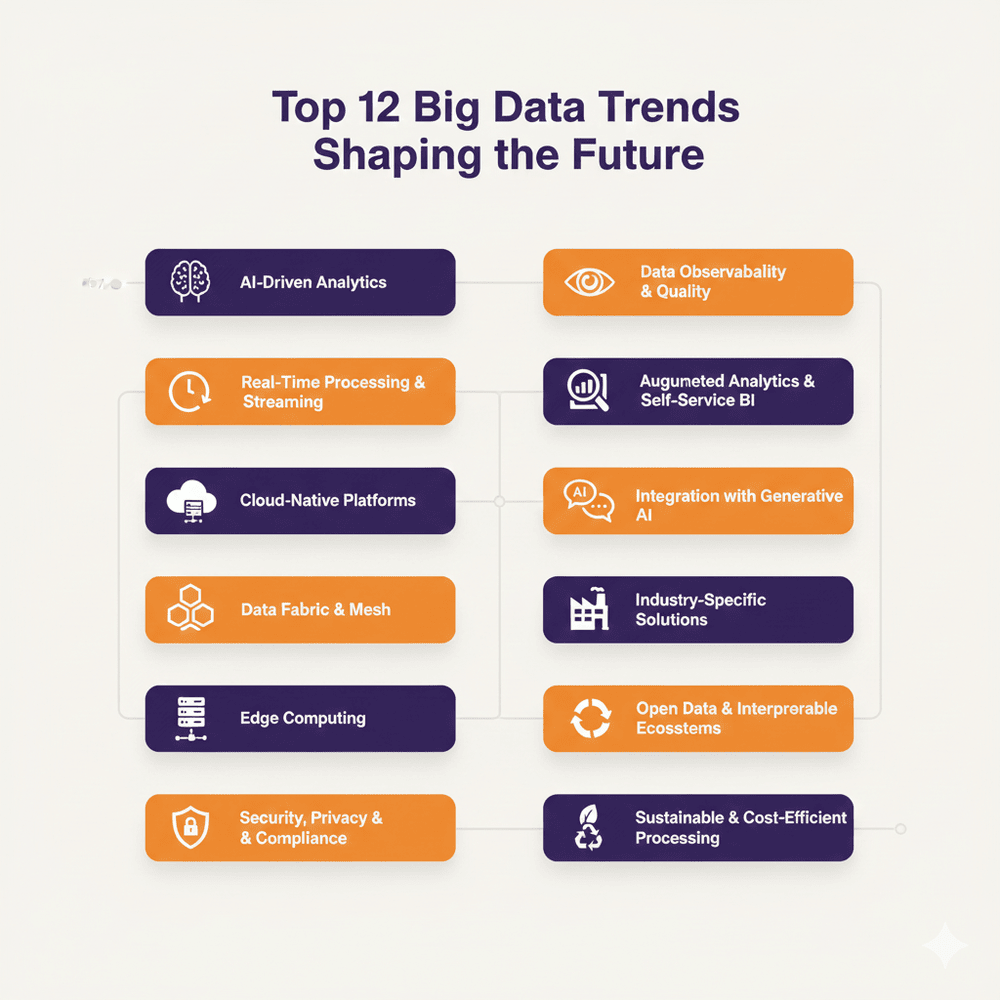
 “`html
Top Data Trends for Understanding the Future of Data
Estimated Reading Time: 15 minutes
Key Takeaways
- Understand the impact of emerging data trends on various sectors.
- Explore the role of AI in transforming data management.
- Recognize the importance of data privacy and ethical considerations.
- Learn about the significance of data visualization and governance.
- Discover future predictions and preparations for upcoming data trends.
Table of Contents
- Introduction to Data Trends
- Emerging Data Trends
- The Impact of AI on Data Trends
- The Role of Data Privacy and Ethics
- Data Visualization as a Key Trend
- The Importance of Data Governance
- Future Predictions for Data Trends
- FAQs
1. Introduction to Data Trends
Data trends are significant patterns and directions in the usage and management of data over time. Understanding these data trends is crucial for shaping strategies across various sectors, from healthcare to finance and beyond. With the rise of the digital economy, data trends play a vital role in decision-making processes, helping organizations to leverage data usage effectively.
As businesses increasingly rely on data to inform their decisions, the importance of understanding these trends cannot be overstated. They guide companies in adapting their strategies to remain competitive and innovative in a rapidly changing landscape.
In today’s digital economy, data management has become more complex and essential. Understanding how data impacts business operations, customer behavior, and market trends plays a pivotal role in driving success. By keeping an eye on these evolving data trends, organizations can position themselves for growth and adaptability.
2. Emerging Data Trends
A range of current and emergent data trends is shaping the future of data management. Notably, big data analytics, AI integration, and real-time data processing are revolutionizing how organizations handle vast amounts of information. For instance, by 2025, the global data sphere is projected to grow to an astonishing 175 zettabytes (source), underscoring the exponential increase in data creation.
This explosion of data has immense implications for businesses and organizations. Big data analytics enables them to uncover insights that were previously hidden. AI integration allows for smarter data utilization and predictive modeling, while real-time data processing empowers organizations to respond swiftly to market changes. For a deeper understanding of how organizations can optimize their data management strategies, check our post on optimizing energy use with data technologies.
As organizations harness these data trends, they gain a competitive edge. By adopting strong data strategies, businesses can better predict customer needs, optimize operations, and drive innovation.
3. The Impact of AI on Data Trends
Artificial Intelligence (AI) is transforming data analysis and management, offering new insights and vast automation possibilities. AI applications are reshaping the landscape of data processing, enhancing everything from predictive analytics to data cleaning.
For example, consider how AI algorithms can significantly improve data cleaning processes. They can automatically identify and rectify inaccuracies, ensuring high data quality. Additionally, in predictive analytics, AI helps forecast future trends based on historical data, allowing businesses to make informed decisions. Our article on smart thermostats and AI integration provides further insights into AI’s role in enhancing efficiency.
Research indicates that AI’s role in harnessing data will continue to grow, making it critical for organizations to leverage these technologies effectively (source). The integration of AI into data management leads to improved efficiency, better decision-making, and enhanced customer experiences.
4. The Role of Data Privacy and Ethics
As data usage has surged, there has been an increasing focus on data privacy. Organizations must navigate the ethical considerations associated with data collection and usage. The implementation of regulations like the General Data Protection Regulation (GDPR) has significantly impacted how organizations model their data strategies.
Data privacy safeguards consumer information and ensures transparency in how data is used. However, organizations often face ethical dilemmas when handling personal data. Questions around consent, data security, and risk versus reward regularly challenge businesses.
For example, companies must balance the need for data analytics against the obligation to protect consumer privacy. Missteps in this arena can lead to data breaches, reputational damage, and legal consequences, making it essential for organizations to create robust data ethics frameworks.
5. Data Visualization as a Key Trend
Data visualization is another essential trend that promotes the accessibility of data insights. It allows decision-makers to grasp complex information quickly through visual representation. Effective data visualization tools include dashboards, charts, and infographics. For additional reading on implementing effective visualizations, visit our related post on best security practices with data visualization.
For instance, dashboards provide a real-time overview of key metrics, empowering organizations to monitor performance and make swift decisions. Infographics condense data into easily digestible formats, making insights accessible to broader audiences.
Research indicates that effective data visualization can significantly impact business outcomes (source). By presenting data in coherent formats, teams can facilitate better collaboration and enhance strategic planning, ultimately driving performance improvements.
6. The Importance of Data Governance
Data governance involves establishing policies and processes to manage data quality and compliance effectively. It is vital for organizations striving to maintain the integrity of their data and meet regulatory requirements.
Best practices for implementing a successful data governance framework include defining data ownership, creating data stewardship roles, and instituting regular data quality assessments. Organizations must ensure that their data is accurate, secure, and utilized effectively.
Poor data governance can lead to severe consequences, such as data breaches, legal penalties, and loss of customer trust. Therefore, maintaining high standards in data oversight is critical for long-term success.
7. Future Predictions for Data Trends
The future of data trends suggests a remarkable increase in the use of cloud computing and Internet of Things (IoT) technologies. As more businesses migrate to cloud environments, they can leverage scalability, flexibility, and improved data access.
Furthermore, the rise of IoT devices will generate vast amounts of data that organizations must manage. Preparing for these trends is essential for businesses seeking to maintain a competitive advantage.
Identifying and adopting proactive measures in data strategy planning will equip organizations to navigate the upcoming landscape of data. This foresight is crucial in ensuring growth and adaptability in an increasingly data-driven world.
8. FAQ Section
1. What are data trends?
Data trends refer to the observable patterns and shifts in how data is created, collected, and utilized over time.
2. Why is data governance important?
Data governance ensures that data is accurate, secure, and used effectively, minimizing risks associated with data breaches and enhancing compliance with regulations.
3. How will AI impact future data trends?
AI will likely automate data processing and analysis, leading to faster insights and more efficient data management practices.
Aanbevolen producten
Hier zijn enkele aanbevolen producten die kunnen helpen bij het optimaliseren van data-analyse en -management:
- Smart Thermostat: Bespaar energie en regel je verwarming op afstand. Bekijk het hier.
- Smart Plug: Beheer energieverbruik en automatiseer je apparaten met gemak. Ontdek meer.
- Smart Security Cameras: Verbeter de veiligheid van je huis met geavanceerde camera’s. Lees meer.
Understanding data trends empowers organizations to navigate the complexities of the digital economy effectively. By embracing emerging technologies, prioritizing data ethics, and implementing robust governance, businesses can position themselves strategically for a bright future.
“`
